Search your information, prepare a draft or reduce a repeatable step. We help you assess the job, test an approach and connect it to the tools your team uses.
The right starting point is a specific task with clear information, a useful output and a way to check the result. We consider simpler automation alongside AI.
Define what a useful and acceptable result looks like.
Use agreed information and access boundaries.
Keep review and exception handling part of the workflow.
Information
A repeatable task
Human review
Assist, then check
Relevant context
Reviewable output
A controlled action
Related platform work. Connected workflows first.
These projects show connected operational workflows and business data. AI capability is assessed and tested separately for each brief.
Operational workflowsBusiness platform
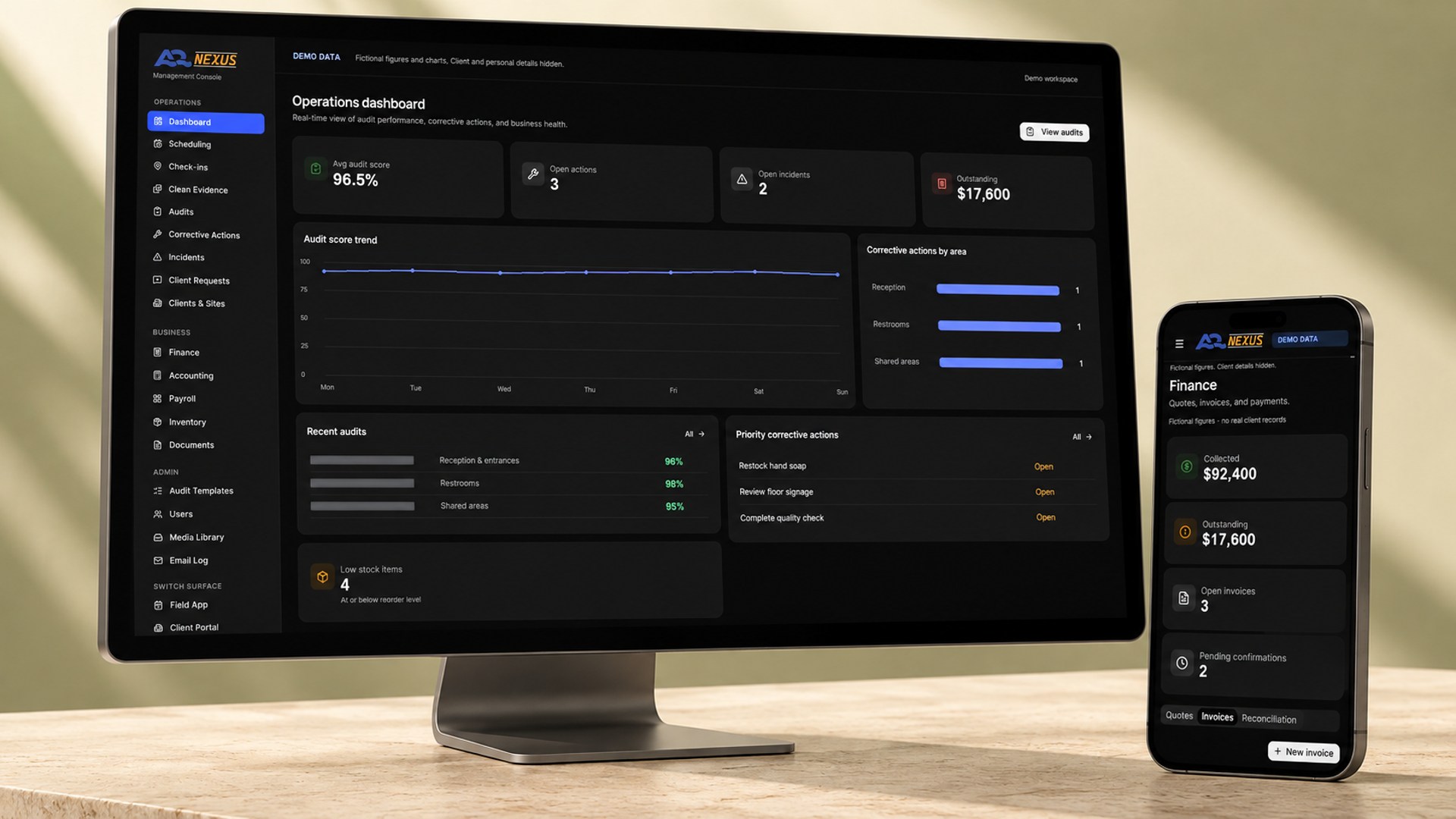
A2 Nexus
Nexus brings scheduling, audits, finance and other operational records into a shared business environment. It illustrates the workflow context an integration project needs.
A useful experiment. A controlled route to release.
We test whether an approach is useful before treating it as a production feature. Clear success criteria, human review and a fallback are part of the plan.
One useful task
An evaluated prototype
A controlled workflow
If priorities change, we review the effect on scope, timing and cost together before adding the work.
We identify the repeatable task, current process, intended users and useful output. We agree what improvement would justify the work.
You review: the task, baseline and intended value.
02
Review information and access.
We assess the available sources, permissions, data quality and integration points. What information can be used and where it can go is agreed early.
You approve: data sources and access boundaries.
03
Agree scope and success criteria.
We define the prototype, acceptable results, review process and limits. Costs, dependencies and what stays under human control are made explicit.
You approve: the evaluation plan and scope.
04
Map and approve the experience.
We design how a request enters the workflow, how output is presented and how a person checks or corrects it. Exception and fallback paths are included.
You approve: the journey and review interface.
05
Build a focused prototype.
We test the approach on representative tasks and information. The prototype is a way to learn before committing to a broader integration.
You review: the first working experiment.
06
Evaluate results and limits.
We compare outputs against the agreed baseline and test difficult or incorrect results. We review reliability, usage costs and the cases that need a human response.
You decide: refine, proceed or stop.
07
Integrate and test the controlled workflow.
If the evaluation supports it, we connect the agreed tools, permissions, review steps and fallback behaviour. Your team tests the complete process.
You approve: the tested release candidate.
08
Roll out, monitor and hand over.
We prepare a controlled release, check the live workflow and agree monitoring, ownership and ongoing evaluation. Model or workflow changes are reviewed as part of maintenance.
You receive: the release and operating plan.
Agree the boundaries before connecting the tools.
An AI feature needs an operating plan, not just a response on a screen.
Information
We agree sources, permissions, privacy requirements and retention.
Human control
We define reviews, exceptions and what must not run automatically.
Evaluation
We agree test examples, acceptable results and a fallback.
Ongoing operation
Usage costs, monitoring and update responsibilities are discussed.
Before we start.
Do we need AI for this task?
Not always. A clear workflow, a search improvement or conventional automation may be enough. We assess the job before choosing an approach.
Can it use our own information?
We can assess your sources, permissions and information structure, then agree what may be connected and how access is controlled.
Will AI take actions automatically?
Only the actions and safeguards explicitly agreed in scope should be connected. We plan human review, limits and fallback behaviour around the task.
Are the featured projects AI case studies?
They are related platform examples showing connected workflows and business information. They are not presented as evidence of a production AI deployment.
What repeatable task would you like to improve?
Tell us how the work happens today, what information it uses and what a useful result would look like.